Orchard Boulevard land tender draws five bids, with an 8.3% lead at the top
A reported S$14.01 million gap separates the leading offers. HDB upgraders still need the award, project details and actual home prices to assess a move.
Published 3 November 2026
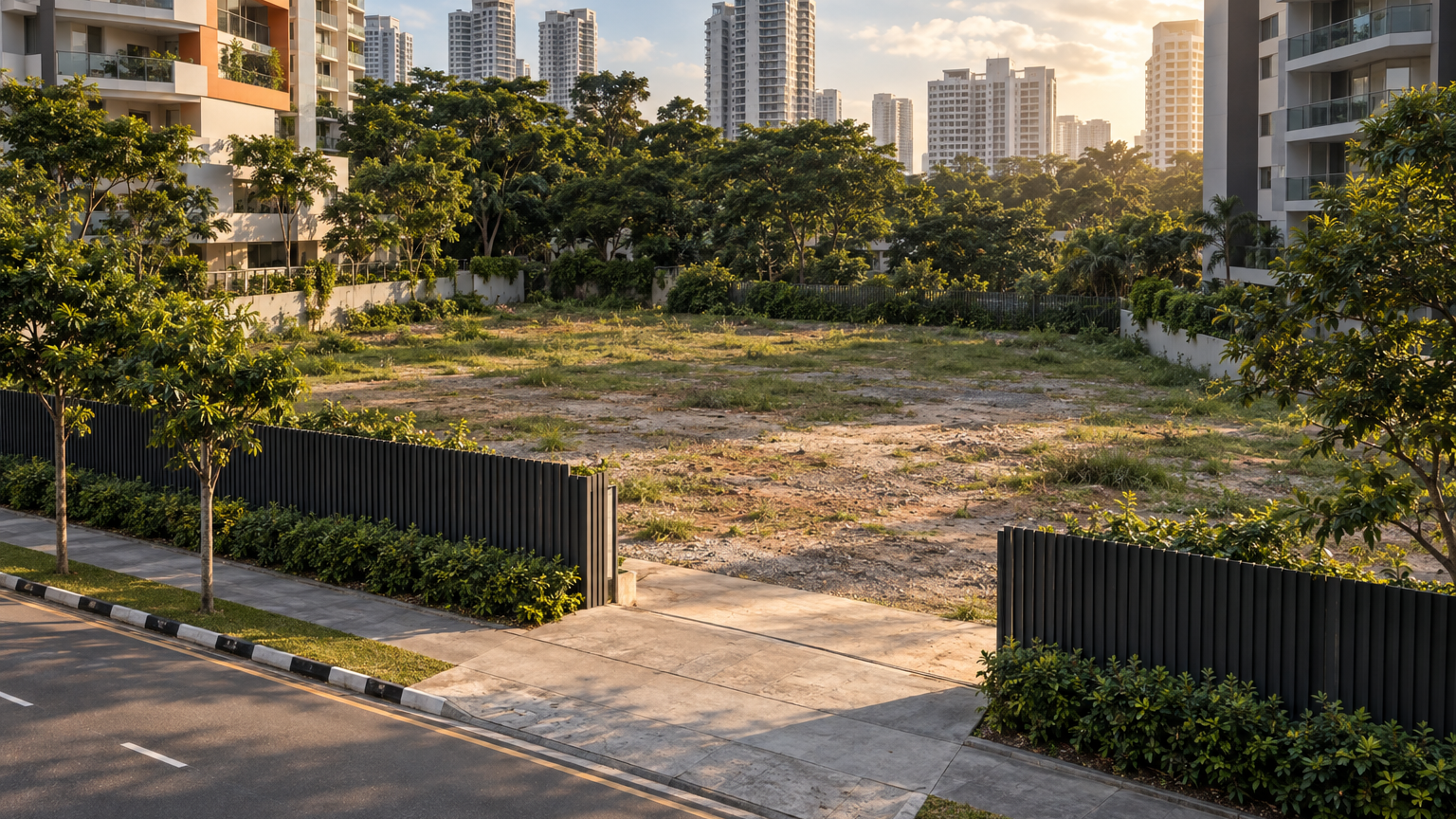
A Hong Leong Holdings–TID partnership led five bids for the Orchard Boulevard housing site at the tender’s 29 October 2026 close, offering S$181.86 million. Its lead over the next bidder was about S$14.01 million, or 8.3%, using the reported bid amounts. That comparison gives HDB owners following the parcel something more useful than the top number alone: a view of how differently developers priced the same land offering.
The reported offer came from Hong Leong Holdings unit Intrepid Investments and TID Residential. URA’s closing notice explicitly says it is not an award announcement: evaluation comes before the authority publicises its decision. This is a tender-close comparison, rather than a confirmed project launch or an apartment price guide.
Five bids, with an 8.3% lead at the top
The reported bid table places the partnership first at S$181,861,924, followed by Global Resource Construction at S$167,850,000. The difference is S$14,011,924. Dividing that difference by the runner-up’s offer gives the rounded 8.3% lead; the comparison uses the total bids, rather than their rounded land rates.
The other reported offers were S$160,720,925 from BBR Holdings, Mindarie Holding and Quarz Capital Group; S$152,388,888 from Wing Tai Holdings; and S$139.9 million from the Macly Group, Roxy-Pacific Holdings, Kimly Group, HLBC and Lin Bing Cheng of LWH Holdings consortium. Five offers establish that several groups participated, while the spread shows they did not put the same price on this parcel.
That is a narrower conclusion than saying developers have all turned more confident about the Orchard housing market. These are offers for one 99-year site at one tender close. The table provides a useful comparison within this event; it does not explain each bidder’s assumptions about construction, sales or future margins.
A land rate is not an apartment quotation
The leading offer was reported at S$1,755 per square foot per plot ratio, usually shortened to psf ppr. The runner-up’s reported rate was S$1,620 psf ppr, followed by S$1,551, S$1,471 and S$1,350 for the remaining bids. The rates keep the ordering of the offers visible without presenting five large totals again.
Keep that full measurement label attached to the figures. The S$1,755 rate is how the land offer was reported; it is not an apartment asking price. Multiplying it by the floor area of a home you might buy would therefore turn a tender statistic into an unsupported purchase estimate. The total bid and its psf ppr rate describe the same offer in different ways, rather than two costs to add together.
Where this fits in an upgrader’s search
The plot was reported as capable of yielding about 110 homes. That makes it a specific potential project to follow if this location belongs in an upgrader’s search, but the estimate does not identify the eventual apartment sizes, bedroom mix or prices. Those details answer a different question from whether a developer was willing to bid for the land.
A practical sequence follows from the evidence. First, establish the award outcome, using URA’s announced evaluation-and-decision process. Then examine the actual project details when available: the home types and sizes needed for a household comparison. Only with apartment pricing evidence can the site become a concrete purchase option rather than a location on a watchlist. This sequence follows the event’s limits; it does not infer a launch date or a household budget from the land bid.
The next milestone is a different announcement
At tender close, URA said it would announce its award decision after evaluation. A highest offer and an award are separate facts, even when the tender result identifies a clear leader. The 8.3% gap helps readers understand the contest that closed on 29 October; it does not make the leading partnership an appointed developer on its own.
For an HDB owner considering a future move, the useful takeaway is to keep these records in order: bid comparison, award decision, project details, then an actual home-price comparison. The tender provides the first of those. It gives this parcel a leading offer and a competitive field without supplying the missing apartment information needed to assess a move.