Older Condo Launches Powered September’s 93.5% Sales Rebound
Developers sold 296 new private homes, but the surprise for HDB upgraders was where buyers found their units—and why funding should come before launch-hunting.
Published 17 October 2026
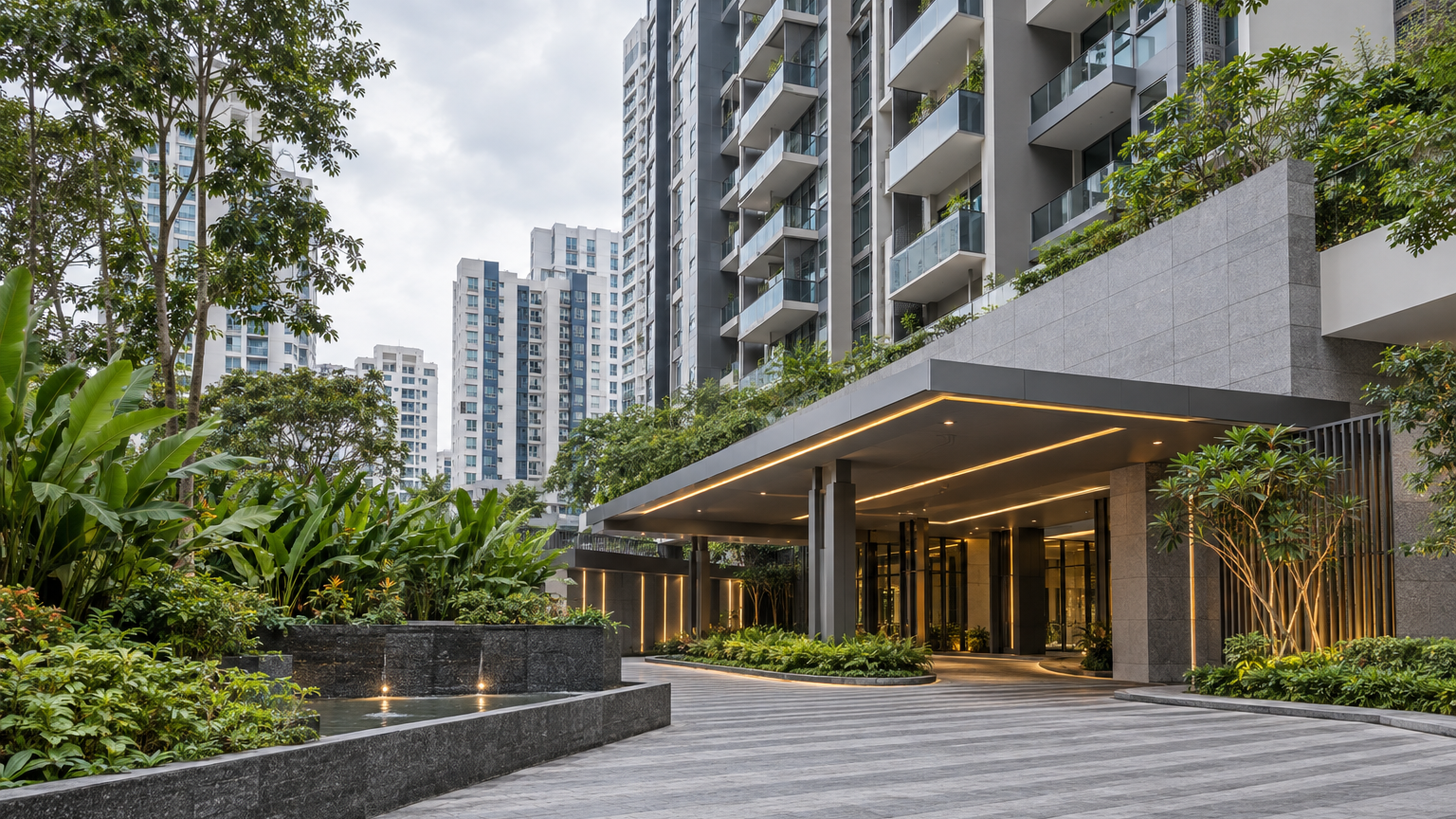
Developers sold 296 new private homes in September 2026, excluding executive condominiums (ECs). That was almost twice August’s 153 sales—a striking 93.5% month-on-month increase from an unusually quiet base.
But this was not the usual story of buyers crowding into several shiny new launches. Just 158 homes were released for sale during September, and the month’s two best-selling projects were developments that had already been on the market.
Older projects did the heavy lifting
Terra Hill recorded 32 sales in September, up from four in August. The Sen followed with 25 sales, compared with 12 the previous month.
That put both ahead of Amberwood At Holland, September’s only newly launched condominium project. The development released 70 of its 212 homes and sold 24 units during the month.
The figures make September’s rebound unusual. New-home sales increased by 143 units from August, yet developers launched only 42 more units. In other words, the rise in purchases was much larger than the rise in fresh supply.
This does not tell us why each buyer chose a particular home. Price, layout, location, remaining unit selection and personal timing could all matter, but monthly sales totals cannot establish buyers’ motives.
What the data does show is simpler: a new launch was not the only place where buyers found something to purchase. Homes remaining at existing projects accounted for much of the month’s activity.
A 93.5% jump needs its denominator
Percentages can make a movement look more dramatic than the underlying count. September’s 93.5% rise came after August sales fell to just 153 units.
The calculation is straightforward: September had 143 more sales than August, and 143 divided by 153 is about 93.5%. Both figures matter. The percentage describes the speed of the rebound; the 296-unit total shows its actual scale.
For an HDB owner considering a private home, that distinction helps remove some unnecessary pressure. A sharp monthly increase is not, by itself, a reason to rush into the next sales gallery. Nor does it establish whether a particular condominium has become affordable for your household.
The more useful lesson is that buyers can compare two pools of homes: units at a newly launched project and unsold units at projects already on the market. An older launch may offer a more visible sales history and a different selection of remaining units, while a new launch may provide broader initial choice. The right comparison still depends on the household’s budget and move schedule.
Your HDB sale price is not your upgrade budget
Before comparing projects, an upgrader needs to work out how much of the HDB sale proceeds will actually be available.
The agreed selling price is only the starting figure. The sale proceeds must first account for the outstanding housing loan, the required CPF refund and relevant selling costs. The CPF refund generally includes the principal withdrawn for the property plus the accrued interest that money would otherwise have earned in the account.
A simple planning sequence is:
- Start with an estimated HDB selling price.
- Subtract the outstanding housing loan.
- Account for CPF principal used and accrued interest to be refunded.
- Subtract likely sale-related costs.
- Separate the remaining cash proceeds from funds returned to CPF.
Money refunded to CPF is not necessarily lost to the next purchase. CPF Board says refunded housing amounts may generally remain available in the Ordinary Account for another property purchase, subject to the applicable housing rules and withdrawal limits.
CPF Ordinary Account savings may also be used to buy private residential property in Singapore. However, the usable amount varies by household and property. An online worksheet can produce a planning estimate; it cannot determine CPF eligibility, property valuation or bank approval.
Map the money and the move together
Funding is only half the exercise. The order of the HDB sale and condominium purchase affects when cash and CPF refunds become available, as well as whether the household needs temporary accommodation.
A practical comparison should therefore put each project beside the same household timeline: expected HDB completion, when sale proceeds may become available, the private home’s payment schedule and when the new home can be occupied. A completed or nearly completed project may create a very different move sequence from a building still under construction.
Only after mapping that sequence should a household test possible purchases against its available cash, usable CPF savings and an actual loan offer. CPF Board similarly advises homeowners considering an upgrade to assess their sale proceeds and financing rather than treating the selling price as money ready to spend.
September’s figures offer a useful reminder rather than a countdown clock. The month’s strongest sellers were not its sole new launch. For HDB upgraders, the sensible starting point is therefore not “Which launch must we catch?” but “What can we fund, and when can we move?”
Sources
- Can I use CPF savings to buy a property? · Central Provident Fund Board
- What to know before you upgrade to a new home · Central Provident Fund Board
- September 2026 developers’ sales · ERA Singapore
- September 2026 developer sales data · Urban Redevelopment Authority